




How Long Should Suit Pants Be ┃A Style Guide
Key Highlights
- Suit pant length is defined by the “break” — the fold where the trouser hem meets your shoe.
- The quarter (slight) break is the most versatile and flattering option for most men.
- Proper length depends on shoe style, trouser cut, body proportions, and personal aesthetic — not just inseam measurement.
The difference between a sharp suit and a sloppy one often comes down to a few inches at the ankle. Suit pant length is one of those details that most men overlook, yet it fundamentally shapes how polished — or disheveled — the entire outfit appears. Too long and fabric pools awkwardly around your shoes; too short and you’re veering into territory that reads as either deliberately trendy or accidentally ill-fitted.
The key to getting it right lies in understanding “the break”, the subtle fold where your trouser hem meets your shoe. Master this concept, and you’ll never second-guess your pants length again.
What Is a Trouser Break?
The break refers to the horizontal crease that forms when your pant leg rests against the top of your shoe. This fold (or lack of one) determines the visual line from your hip to your foot and significantly impacts how your proportions read to others.
Several factors influence how the break appears beyond raw measurement. Hem width plays a role: narrower openings create more pronounced creasing at the same length, while wider legs drape more smoothly. Trouser rise matters too: higher-waisted pants can make legs appear longer, allowing for slightly more length without looking excessive. Understanding these variables helps explain why two men with identical inseams might need different hemlines to achieve the same visual effect.
Types of Suit Pant Breaks
No Break
With no break, the hem barely grazes the top of your shoe, creating zero fold in the fabric. This delivers a clean, modern aesthetic that emphasizes sharp lines and showcases your footwear. The style works best with slim or tapered trousers and suits men with shorter frames who want to elongate their legs visually.
That said, no-break pants can read as too fashion-forward for conservative environments. In traditional corporate settings or formal events like funerals, this length might come across as aggressively trendy rather than appropriately dressed. Reserve it for creative workplaces, social occasions, or when you genuinely want to make a style statement.
Quarter/Slight Break
The quarter break hits the sweet spot for most men. Here, the hem rests gently on the shoe with only a minimal crease forming at the front, with just enough contact to signal intention without any excess fabric.
This length flatters a wide range of body types and transitions seamlessly across business and semi-formal occasions. For the modern professional who wants to look polished without appearing try-hard, the slight break delivers versatility that few other lengths can match. It pairs equally well with oxfords in the boardroom and loafers at dinner.
Half/Medium Break
The half break creates a single noticeable fold that covers the top portion of your shoe, hitting about mid-way down the shoe’s opening. This traditional suit pant length remains the safest choice for conservative offices, formal business events, and occasions where classic presentation matters more than contemporary edge.
Broader builds and wider-leg trousers benefit most from this length. The extra fabric provides visual balance and accommodates movement without riding up awkwardly. If you’re wearing cuffed trousers, the half break typically works better than shorter options, as cuffs add visual weight that pairs naturally with slightly more length.
Full Break
A full break means generous fabric folding around your ankle—one substantial crease that covers most of the shoe’s laces. This length suits taller or larger men, wide-leg cuts, and deliberately traditional styling. Think classic American tailoring or vintage-inspired looks.
Approach with caution, though. The line between intentional full break and simply too-long pants is thin. More than one fold signals excess length that reads as sloppy rather than sophisticated. If your heels catch the back hem as you walk, you’ve crossed into territory that needs correction.
How Long Should Men’s Dress Pants Be?

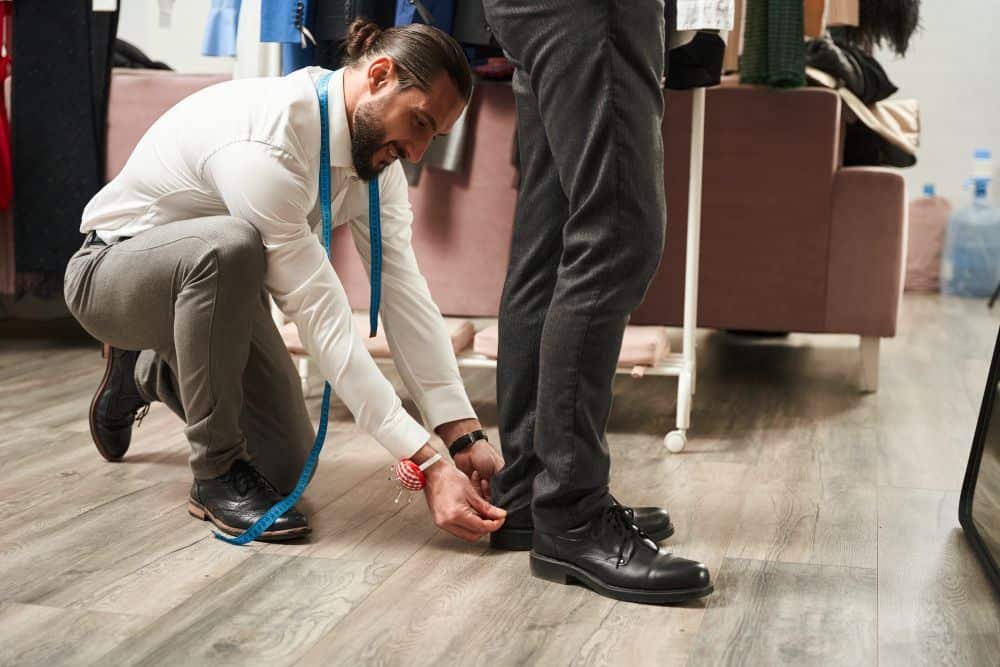
How long men’s dress pants should be involves two reference points: front and back. The front of your trouser should lightly touch the top of your shoe, while the back should fall near the top of your heel, slightly longer than the front to accommodate the natural angle of your foot.
In fact, shoe style affects how long suit pants should be more than most men realize. Low-profile footwear like oxfords and loafers sits closer to the ground, meaning your pants can be slightly shorter while still achieving the same break. Boots with higher counters require additional length to prevent your trouser from hovering awkwardly above the shoe opening.
If you rotate multiple shoe styles with the same suit, aim for a length that works with your most frequently worn pair. Alternatively, consider having dress trousers hemmed specifically for different footwear. Many men keep one pair cut for dress shoes and another for boots or more casual options.
Getting Your Suit Pant Length Right at Perfect Tailors
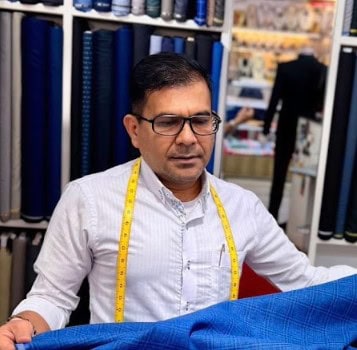
Bangkok is a suit-making hub that sees thousands of men and women custom-fitted for formal wear each day. For many travelers, working with custom tailors in Bangkok is even on their itinerary. A skilled tailor assesses your height, stance, preferred shoe styles, and personal aesthetic before making a single cut. They understand that how long suit pants should be varies not just between body types but between the same person’s different suits.
Perfect Tailor Bangkok specializes in exactly this kind of precision. Our made-to-measure process accounts for every variable that affects trouser length, from your natural posture to the dress shoes you bring to your fitting. The result is pants that drape exactly as intended, no guessing, no post-purchase alterations and no compromise.
Book an appointment at Perfect Tailor, where our expert team crafts bespoke suits tailored to your exact specifications.
References
Guide to Suit Pant Lengths: 5 Types of Pant Breaks. MasterClass. Retrieved February 12, 2026, from https://www.masterclass.com/articles/guide-to-suit-pant-lengths
How Long Should Dress Pants Be? Pant Breaks Style Guide. (2024, September 4). Black Lapel. Retrieved February 12, 2026, from https://blacklapel.com/blogs/the-compass/guide-to-dress-pant-breaks
Frequently Asked Questions
Q: What is the “break” in suit pants?
A: The break is the horizontal crease that forms where your trouser hem meets the top of your shoe. It determines how much fabric rests on the shoe and affects the overall silhouette of your suit.
Q: What is the most versatile pant break?
A: The quarter or slight break is the most versatile. It creates a minimal crease, looks intentional, and works across business, formal, and semi-formal settings.
Q: Are no-break pants appropriate for work?
A: It depends on your environment. No-break trousers offer a sharp, modern look but may feel too fashion-forward in conservative corporate or formal settings.
Q: How long should men’s dress pants be in the front and back?
A: In the front, the trousers should lightly touch the top of your shoe. In the back, they should fall to the top of your heel, slightly longer than the front to accommodate your natural stance.
Q: Do different shoes affect pant length?
A: Yes. Low-profile shoes like oxfords require slightly less length, while boots with higher counters need additional fabric to avoid looking too short.
Q: Are cuffed trousers better with a certain break?
A: Cuffed trousers typically pair best with a half (medium) break, as the added fabric weight complements a slightly longer length.
Q: Should I hem pants differently for different shoes?
A: If you frequently switch between dress shoes and boots, it can be worth hemming separate trousers for each style to maintain a consistent, polished break.