




Tuxedo vs Suit: The Differences and When to Wear Each
Key Takeaways
- A tuxedo carries satin details on the lapels, buttons, and trouser seam, while a suit has none of these features.
- Tuxedos are reserved for black tie events held in the evening, while a suit fits business, daytime formal, and most social occasions.
- Tuxedo styling follows a fixed formula, while a suit allows far more flexibility in shirt, tie, and shoe choices.
- Tuxedo fabric is traditionally black or midnight wool with a smooth finish, while suit fabric spans a much wider range of materials suited to different climates.
- Both garments can be built from the same body measurements, making it easier to own one after the other as occasions demand.
A tuxedo vs suit decision usually comes down to one thing: the dress code on the invite. Both start from the same matching jacket and trousers, yet the finer details, the styling rules, and the occasions each one serves set them apart. Once the differences are clear, deciding which one belongs in your closet first becomes far easier.
What Makes a Tuxedo Different From a Suit
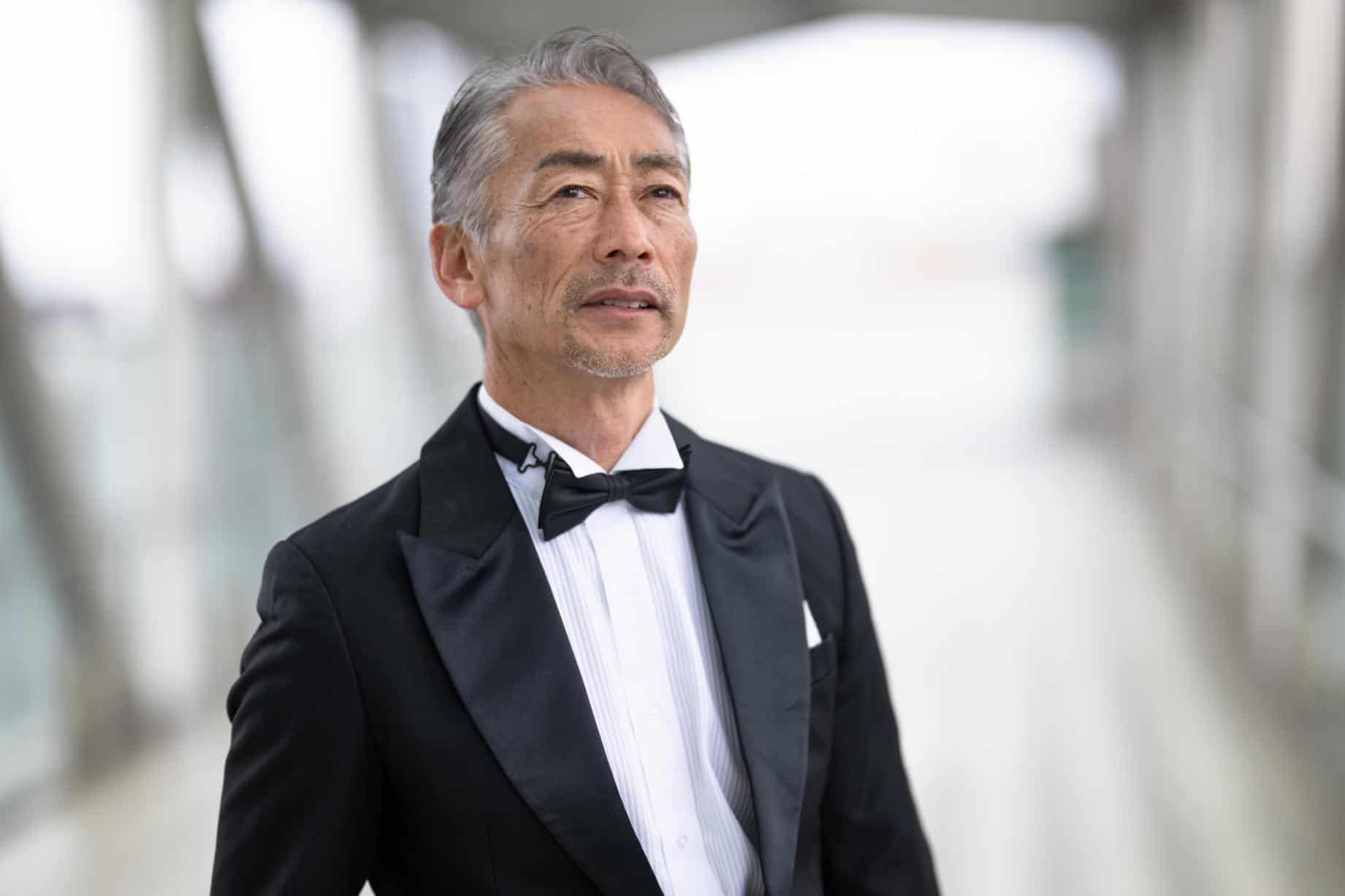
The differences between a tuxedo and a suit come down to satin. A tuxedo carries satin in a few key places, while a suit carries none of it:
- Lapels: Tuxedo lapels are cut in a peak or shawl shape and faced in satin, while suit lapels are almost always notched and match the jacket cloth, though a peak lapel does show up on some dressier suits.
- Buttons: Tuxedo buttons are covered in satin to match the lapel, while suit buttons are plain and cut from horn, plastic, or the jacket’s own fabric.
- Trousers: Tuxedo trousers skip belt loops entirely and rely on suspenders or side adjusters, with a satin stripe down the outer seam, while suit trousers commonly include belt loops and no stripe.
- Pockets: Tuxedo pockets are jetted, clean slits finished in satin, while suit pockets typically use flaps instead.
These details add up under evening lighting. Satin catches light in a way matte wool never does, which is exactly why a tuxedo reads as more formal the moment it steps under a chandelier or a stage spotlight, while a suit stays understated by comparison.
When to Wear a Tuxedo vs a Suit
Reach for a tuxedo when the invite specifies black tie. Weddings held after dark, galas, formal awards nights, and charity balls all call for it, and tuxedos are traditionally evening wear, worn after 6 p.m. This timing is part of what separates the dress code from anything worn earlier in the day.
A suit, on the other hand, covers business meetings, client dinners, most weddings, cocktail events, funerals, and formal daytime occasions. When an invitation reads black tie optional, a tuxedo is preferred, though a dark suit with a conservative tie is accepted. Time of day plays as big a role as the venue, since a dressy daytime event still sits in suit territory even when the setting itself feels formal.
Bangkok executives and expats tend to run into both dress codes within the same month, a charity gala one week and a client dinner the next. The wording on the invitation is usually the clearest signal, since “formal attire” or “cocktail attire” points toward a suit, while “black tie” or “evening formal” points toward a tuxedo.
How to Style a Tuxedo vs a Suit
Tuxedo styling stays narrow and deliberate. A white formal dress shirt, often with a pleated front or French cuffs, pairs with a black bow tie and polished or patent black leather shoes. Cufflinks are optional, and a cummerbund or waistcoat covers the waistband for a clean finish, though neither is strictly required. There is very little room to improvise, and that is part of the appeal.
A suit opens up considerably by comparison. Dress shirts can be white, light blue, or any color that fits the occasion. Ties can run long or bow style, shoes shift between black and brown depending on the suit’s shade, and a pocket square or a good watch rounds out the look without breaking any rules. A herringbone silk tie or a contrast pocket square can take a navy suit in a completely different direction from one event to the next, something a tuxedo’s formula rarely allows.
The practical difference is simple. A tuxedo locks in most of the styling decisions for you, while a suit gives you room to express personal taste within the bounds of the dress code.
How to Choose Between the Two
The question is less about which garment looks better and more about how often you will actually wear each one. Attending black tie events more than once or twice a year makes owning a tuxedo worthwhile, since rental fit rarely matches a garment built to your own measurements. For everyone else, a versatile dark navy or charcoal suit covers the bulk of formal situations and doubles as a reliable choice for the office.
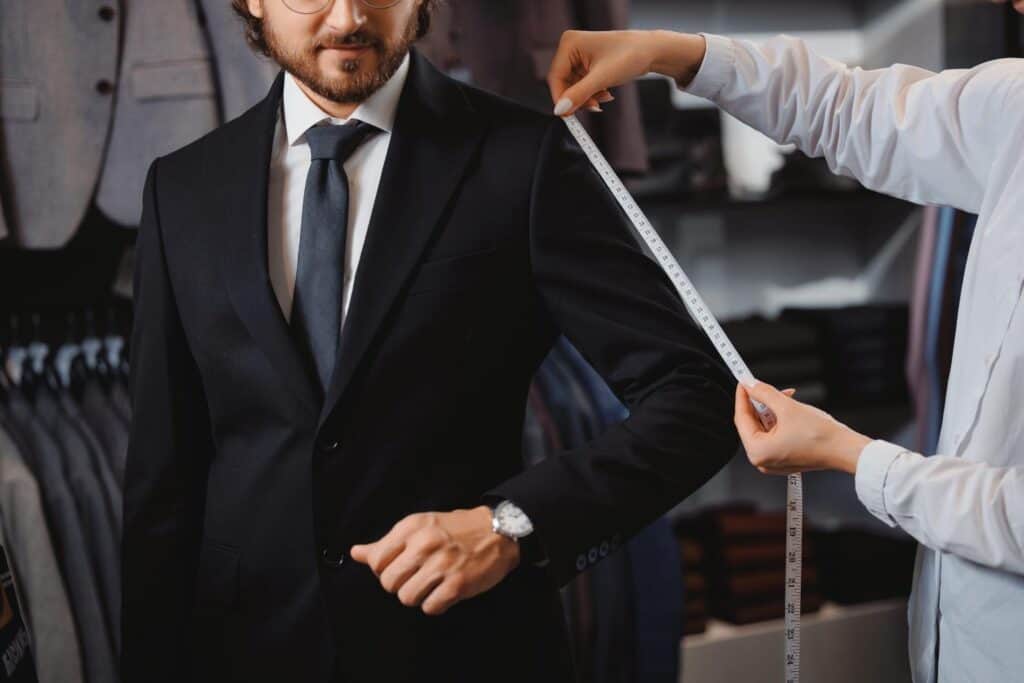
Start with the suit if you need one garment that works across the widest range of occasions, then add a tuxedo once your calendar genuinely calls for it. A short consultation with a tailor usually settles the question quickly, since matching your upcoming events to the right garment takes only a fitting or two to work out.
Choosing the Right Fabric for Each
Tuxedo fabrics are traditionally black or midnight blue wool with a smooth finish such as barathea or fine worsted, with velvet reserved for winter or dressier evening events. Choosing your tuxedo fabric comes down to the season, the formality of the event, and how much sheen you want the jacket to carry under evening light.
Suit fabrics cover a much wider range, spanning wool, lightweight wool, cotton, linen, and blends, each suited to different climates and dress codes. In Bangkok’s heat, a tropical weight wool or a lightweight wool blend with partial lining keeps either garment breathable through long events without losing its shape. A half-lined or lightly padded construction adds another layer of comfort, which matters when you are standing through a ceremony and reception in the city’s humidity. This is also where made to measure suits in Bangkok have an advantage, since the tailor can match the fabric weight and lining to the climate rather than working from a fixed off-the-rack construction.
Know the Dress Code, Own the Right Garment
A tuxedo and a suit solve different problems, one built for the strict formality of black tie, the other for everything else a wardrobe needs to cover. Getting the fit right matters more than the garment type itself, since a poorly fitted jacket looks the same whether it carries satin lapels or not.
With more than 25 years of experience building suits and tuxedos for executives, expats, and travelers, Perfect Tailor BKK is a tailored suit shop in Bangkok where every garment is built from your measurements. Our tailors work through fabric, fit, and construction for both garments, so the right choice is clear before the first fitting even begins.
Visit Perfect Tailor BKK to compare fabrics and construction in person and get started on your next tuxedo or suit.
References:
Suit vs. Tuxedo: The Ultimate Guide – Differences In Men’s Dress Codes. Retrieved 15 July 2026, from https://www.gentlemansgazette.com/suit-vs-tuxedo-part-i/
Frequently Asked Questions About Tuxedo and Suit
Q: What is the main difference between a tuxedo and a suit?
A: A tuxedo carries satin details on the lapels, buttons, and trouser seam, and is styled with a bow tie and formal shirt for evening black tie events. A suit has no satin trim, uses a wider range of fabrics and colors, and works for business, daytime, and most social occasions.
Q: Can I wear a suit to a black tie event?
A: Only if the invitation specifies black tie optional. In that case, a dark suit paired with a conservative tie is generally accepted. If the invitation states black tie without qualification, a tuxedo is expected.
Q: Is a tuxedo more expensive to have made than a suit?
A: Cost depends mainly on fabric choice and construction rather than the garment type itself. A tuxedo in a premium wool-mohair blend can cost more than a standard business suit, while a simpler tuxedo fabric can land close to typical suit pricing.
Q: Can I wear a black suit instead of a tuxedo?
A: A black suit can work for a black tie optional event, but it is not a substitute for a true black tie invitation. Without satin lapels, covered buttons, and a bow tie, a black suit still reads as business attire rather than formal evening wear.