




Does a Suit Need Ironing? What You Should Know
Key takeaway / Summary of topic answer
- Most suits should not be ironed, as direct heat and pressure can cause shine, scorching, and structural damage to wool and internal canvas construction.
- Suit trousers and certain fabrics like linen or cotton can be carefully ironed with a pressing cloth, but steaming is generally the safer and more effective option.
- Proper storage, rotation, and investing in high-quality tailoring significantly reduce wrinkles and long-term maintenance needs.
Every suit owner eventually ponders the same question: ‘Should I iron my suit?’ The wrinkles are there, the iron is available, and the temptation to press everything flat seems reasonable. But ironing a suit requires a fundamentally different approach than ironing a dress shirt. In most cases, the iron should just stay in the closet entirely.
Understanding why suits resist conventional ironing and what alternatives actually work protects your investment and keeps your tailoring looking sharp for years.
Does a Suit Need Ironing?
For most suits, the answer is no. The reasons come down to construction and fabric characteristics that make suits fundamentally different from other garments in your wardrobe.
Suit jackets contain multiple layers: outer fabric, inner canvas or fusing, shoulder padding, and lining. These components don’t respond uniformly to direct heat and pressure; in other words, what works on one layer can damage another. The canvas that gives a jacket its shape can warp. Shoulder padding can compress unevenly. Lapels can lose their carefully rolled edges.
Then there’s the fabric itself. Wool, the most common suiting material, poses additional challenges. The fibers have a natural crimp that creates texture and resilience. Direct ironing pressure flattens this crimp permanently, leaving the fabric looking worn and developing an unwanted shine. Unlike cotton shirts that benefit from a crisp, pressed finish, wool suits should maintain their soft, dimensional surface.
If your suit genuinely does need ironing after every wear, something else may be wrong: improper storage, wearing the same suit too many consecutive days, or fabric that has reached the end of its useful life.
What Happens When You Iron a Suit
Direct ironing can cause problems ranging from cosmetic to structural, and many are irreversible, so take extra care. These include:
- Shine marks appear when heat and pressure compress wool fibers, creating a glossy surface that catches light differently than the surrounding fabric. Once these marks develop, they rarely disappear completely. Dark suits will show shine most visibly, particularly on lapels, seat areas, and anywhere the iron lingered too long.
- Scorching happens much faster than expected with wool. The fibers weaken and discolor when exposed to excessive heat, leaving yellowish or brownish marks that no amount of cleaning removes. Scorching can occur even at moderate iron temperatures if the iron sits in one place too long.
- Structural damage affects the jacket’s shape and drape. Flattened lapels lose their roll. Shoulder padding compresses into unnatural shapes. The chest area, where canvas provides structure, can bubble or pucker if heat warps the internal layers differently from the outer fabric.
- Water marks result from steam applied incorrectly or iron plates that leak. These spots may fade with time but often leave permanent discoloration, especially on lighter-colored suits.
When Ironing a Suit Might Be Acceptable
Certain situations permit careful ironing, though steaming remains the safer first choice. You can iron:
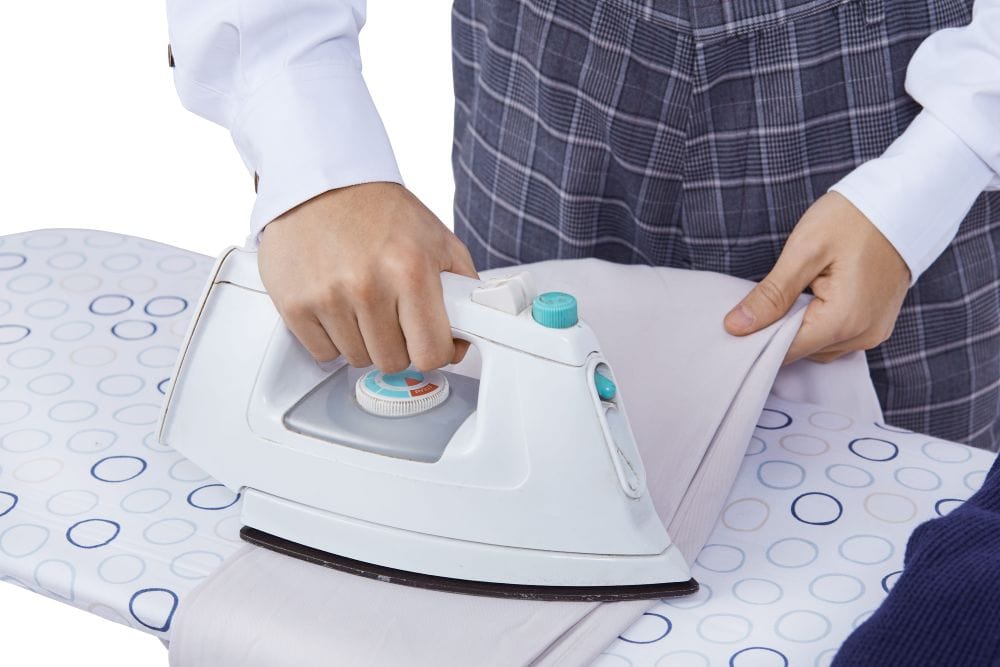
- Suit trousers – they tolerate ironing better than jackets because they lack the complex internal structure. Maintaining a sharp crease down the front of each leg often requires the controlled pressure that only an iron delivers. Use a pressing cloth, moderate heat appropriate to the fabric, and iron along the existing crease rather than creating new ones.
- Linen and cotton suits – they handle more heat than wool but still benefit from protection. Iron these fabrics inside-out when possible, and always place a pressing cloth between the iron and the outer fabric. The natural wrinkling of linen is part of its character, so aggressive ironing fights a losing battle and stresses the fibers unnecessarily.
- Stubborn creases – When steaming doesn’t work, light ironing is a last resort. Test on an inconspicuous area first. Use the lowest effective temperature. Never press directly on the outer fabric without a barrier. If the crease persists after careful ironing, professional pressing with specialized equipment becomes the appropriate solution.
Better Alternatives to Ironing a Suit
Steaming handles most wrinkle situations without the risks that ironing a suit introduces. The process relaxes fibers with moisture and gentle heat, allowing them to return to their natural position without compression damage.
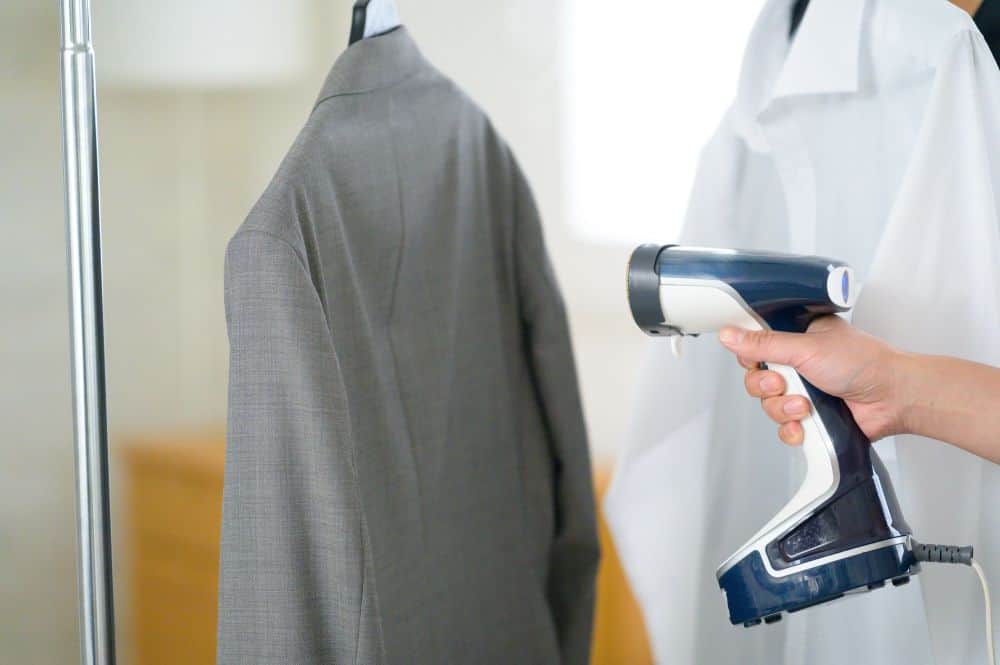
Garment steamers offer the most control. Hang the suit on a sturdy hanger, hold the steamer approximately six inches from the fabric, and work in smooth downward strokes. Focus on problem areas like the back panel, the bend of the elbow, and behind the knees on trousers. Let the suit air dry completely before wearing or storing.
The bathroom steam method is known to work when no steamer is available. Hang your suit in the bathroom while running a hot shower, keeping the garment away from direct water contact. The accumulated steam relaxes wrinkles over 10 to 15 minutes. This DIY approach handles light to moderate wrinkling effectively.
Professional pressers work with steam-only machines, vacuum tables that draw moisture through fabric, and shaped forms that support jacket structure. When your suit needs more than steaming can provide, professional service delivers better results than amateur ironing.
Of course, high-quality suits resist wrinkling more effectively than cheaper alternatives. Quality wool recovers from compression during normal wear. Proper canvas construction maintains shape without constant pressing. Careful stitching allows fabric to move naturally rather than bunching or pulling.
Otherwise, proper storage prevents most wrinkles from forming in the first place. Use wooden or padded hangers that support the shoulder shape. Allow space between garments for air circulation, and let suits rest at least 24 hours between wearings so fibers can recover naturally. Suits stored correctly need far less intervention than those crammed into crowded closets.
For more detailed guidance on maintaining your suit between professional cleanings, see our guide on how to clean a suit jacket at home.
Start with the Highest Quality Suit at Perfect Tailor
When you invest in superior tailoring, you reduce the maintenance burden significantly. The suit works with you rather than against you, bouncing back from daily wear without demanding constant attention. When you start with quality, you never consider the iron.
Perfect Tailor Bangkok constructs every suit with this longevity in mind. Premium fabrics, quality canvas interfacing, and expert tailoring create garments that maintain their shape and drape beautifully through years of regular wear. Our bespoke suits fit your body precisely, which means less stress on seams and fabric during movement.
There’s no better Bangkok suit tailor shop for men and women who want custom clothing that looks exceptional with minimal maintenance. Book an appointment at Perfect Tailor for a suit crafted from premium materials and experience the difference quality construction makes in both appearance and care.
References:
- What are the risks of pressing a suit incorrectly? Retrieved February 26, 2026, from https://cafecostume.com/blog/what-are-the-risks-of-pressing-a-suit-incorrectly/
Frequently Asked Questions
Q: Should you iron a wool suit?
A: No, wool suits should generally not be ironed because direct heat and pressure can flatten the fibers, create shine marks, and damage the jacket’s internal structure.
Q: What happens if you iron a suit jacket?
A: Ironing can cause shine, scorching, water marks, and structural damage such as flattened lapels, compressed shoulder padding, or warped canvas.
Q: Is it safe to iron suit trousers?
A: Yes, suit trousers can be carefully ironed to maintain a sharp crease, using moderate heat and a pressing cloth to protect the fabric.
Q: What is the best way to remove wrinkles from a suit?
A: Steaming is the safest method. Use a garment steamer or hang the suit in a steamy bathroom to relax fibers without compressing them.
Q: Can you iron a linen or cotton suit?
A: Linen and cotton suits tolerate ironing better than wool, but they should still be pressed inside-out with a cloth barrier to prevent damage.
Q: How can you prevent suit wrinkles in the first place?
A: Store suits on wooden or padded hangers, allow space between garments, and rotate wear so the fabric can recover for at least 24 hours.
Q: Does a high-quality suit wrinkle less?
A: Yes, premium wool, proper canvas construction, and expert tailoring help suits recover naturally from wear and require less frequent maintenance.