




How to Put On Cufflinks and Style Them Right
Key Takeaways
- Cufflinks replace a sewn-on button and need matching holes on both sides of the cuff, which means a French or convertible cuff rather than a standard button cuff.
- The fastening is the same every time: fold, align the holes, push the post through from the outside, then lock the backing.
- How you lock it depends on the type, with toggle backs rotating 90 degrees, fixed backs pushing through like a button, and chain links showing a face on both sides.
- Formality drives the choice, so plain metal suits business wear, while onyx or mother-of-pearl pairs with a tuxedo.
- The cuff only looks right if the shirt sleeve and jacket sleeve are finished to the correct length for your wrist.
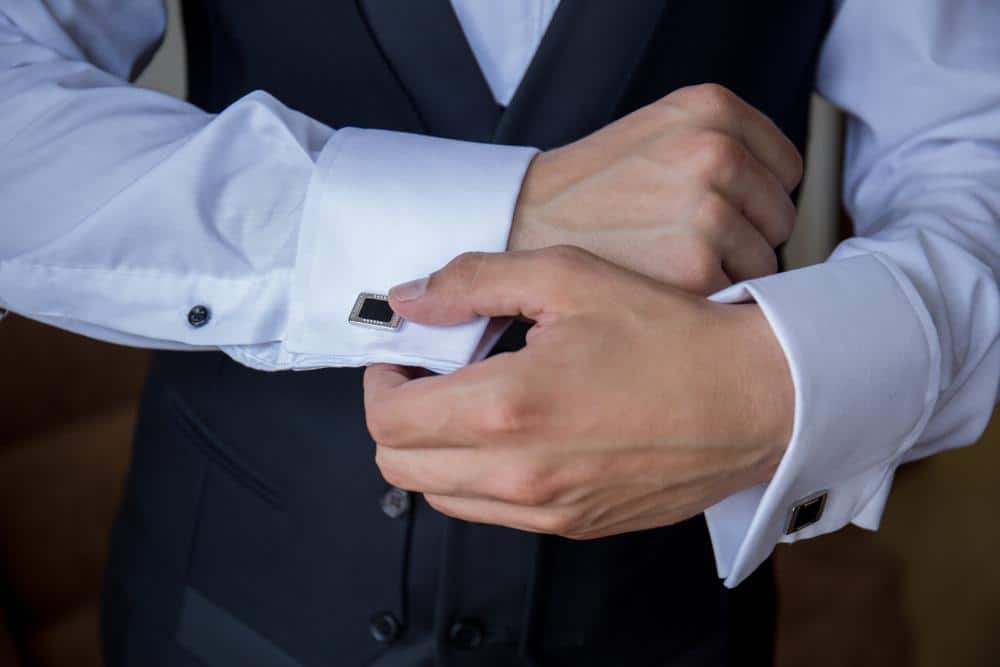
Wondering how to put on cufflinks? Fold the cuff into position, align the buttonholes, insert the cufflink through all layers, and secure the backing. The process takes less than a minute, but your shirt must have French or convertible cuffs designed for cufflinks. In this guide, you’ll learn how to wear cufflinks correctly, choose the right pair for different occasions, and ensure your shirt and jacket fit showcase them properly.
Check Whether Your Shirt Takes Cufflinks
Before learning how to put on cufflinks, make sure your shirt is designed to accept them. Cufflinks require matching buttonholes on both sides of the cuff. If you’re wondering whether cufflinks can be worn on a regular button cuff shirt, the answer is generally no unless the cuff is altered by a tailor.
That means matching holes on both sides of the cuff, not a button on one side and a hole on the other. Three cuff types cover almost everything you will come across:
- French cuff, also called a double cuff: built for cufflinks. The cuff is cut extra long and folds back on itself, lining up four buttonholes.
- Convertible cuff: a button and an adjacent hole, so it closes either way depending on the day.
- Standard button cuff: one button, one hole, and no way for a cufflink to pass through.
Settle this at the point of order: specify French or convertible cuffs when ordering custom-made men’s shirts rather than attempting to convert a button cuff afterward.
How to Choose Cufflinks for a Suit or Tuxedo
Formality decides most of this, and the rest comes down to matching the metal to the hardware you already wear, meaning your watch, belt buckle, and tie bar.
- Business suit: plain polished metal such as silver, stainless steel, or gunmetal, or a clean geometric design that reads quietly across a meeting table.
- Wedding suit: mother-of-pearl, a semi-precious stone inlay such as lapis or onyx, or polished metal with subtle engraving, picking up a tone from your tie or pocket square.
- Tuxedo: black onyx, mother-of-pearl, or plain polished metal. If the shirt has a stud front, match the cufflinks to the studs.
Silk knots sit at the casual end of the range, making them better suited to an odd jacket, blazer, or creative office than a wedding or black-tie event. Mixed metals are a styling preference rather than an error, but keeping them uniform is the safer choice when the dress code is strict.
How to Put On Cufflinks for the First Time: Step by Step
The first three steps are identical whatever pair you own, and only the last one changes with the backing.
- Fold into the kissing position. Turn the French cuff back on itself so the cuff ends press flat together with the inside linings touching, which is known as a kissing cuff. Do not overlap the edges the way a standard button cuff closes, since four folded layers sitting across each other will bulge and pull the buttonholes out of line. For a convertible cuff, pinch the two edges together so the buttonholes meet in the same kissing position.
- Align. Line the buttonholes up evenly so all the layers sit flush.
- Insert. Hold the cufflink with the decorative face outward and push the post through every layer from the outside in.
- Secure. Lock the backing according to the type you are wearing.
Securing Different Cufflink Types
- Toggle or swivel back, including whale-back and bullet-back: rotate the hinged bar 90 degrees so it lies across the post and cannot slip back through the holes.
- Fixed back, such as stud and ball-return styles: no moving parts, so angle the smaller backing and push it firmly through all the layers the way you would a shirt button.
- Chain link: feed the smaller decorative head through every hole, leaving a face showing on both sides of the cuff.
Check Your Jacket Sleeve and Cuff Fit
Knowing how to wear cufflinks well comes down to how the finished cuff sits against your wrist and your jacket. Three things to look at in the mirror:
- The reveal: convention puts roughly a quarter to half an inch of shirt cuff below the jacket sleeve when you stand with your arms down, though how much you show is a style preference.
- Watch clearance: your watch should sit under the cuff without catching on the cufflink hardware as you move.
- Wrist mobility: the cuff should rest comfortably when you bend your arm, rather than digging in or riding up the forearm.
Of those three, the reveal is the one people most often diagnose at the wrong end: if the cuff disappears when you lower your arms, the jacket sleeve is usually too long rather than the shirt sleeve being too short.

Dress the Detail as Well as the Suit
The right cufflinks can elevate a suit, but they only look their best when paired with properly fitted cuffs and sleeves. A shirt that is too tight, too loose, or cut with the wrong cuff style can undermine even the most carefully chosen accessories.
As an established suit and tuxedo tailor in Bangkok, Perfect Tailor BKK cuts custom dress shirts with French and convertible cuff options, patterned around your wrist circumference, your watch, and the exact jacket sleeve the shirt will accompany.
Visit Perfect Tailor BKK in Bangkok today to design a shirt and suit built to your exact fit and proportions.
References:
How to Put On Cufflinks. Retrieved 22 October, 2026 from https://www.wikihow.com/Put-On-Cufflinks
Frequently Asked Questions About Wearing Cufflinks
Q: Do you put cufflinks on before or after putting on the shirt?
A: Put the shirt on first. A French cuff is cut close to your wrist, so once the cufflink is locked through all four holes the opening is too narrow for your hand to pass through. Fasten each cuff once the shirt is on, or if that feels fiddly, push the post through the two holes on the outer side of the cuff while the shirt is still flat, put the shirt on, then feed the post through the remaining two holes and lock the backing.
Q: Can you wear cufflinks on a regular button cuff shirt?
A: You cannot, unless the shirt is altered. A standard button cuff has a button on one side and a single hole on the other, so there is nowhere for the post to pass through. A tailor can remove the button and cut a matching hole, though ordering French or convertible cuffs from the start is the cleaner route.
Q: Which cufflinks should you wear with a suit or a tuxedo?
A: With a business suit, choose polished metal such as sterling silver or stainless steel, or a clean geometric design. With a tuxedo, stick to black onyx, mother-of-pearl, or plain polished metal, matched to your shirt studs if it has a stud front. Keep the metal consistent with your watch and belt hardware when the dress code is formal.
Q: Which way should the cufflink face?
A: The decorative face points outward, away from your body, so it shows below your jacket sleeve when your arms rest at your sides. Push the post through from that outer edge so the backing closes against your wrist.